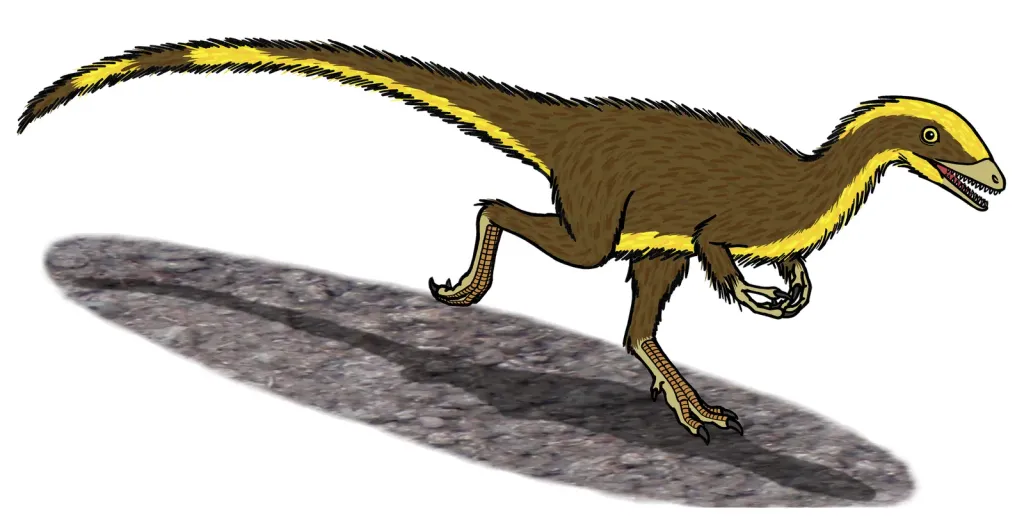
Compsognathus longipes
उच्चारण: komp-SOG-nah-thus LON-jih-peez
Coelurosauria · Compsognathidae
A chicken-sized predatory dinosaur from the Late Jurassic lagoons of Bavaria, one of the first nearly complete dinosaur skeletons ever found. Its type specimen still holds the lizard it swallowed.
- Bipedal
- Famous specimen
- Exceptional preservation
- काल
- जुरासिक· किमेरिजियन
- आहार
- मांसाहारी
- लंबाई
- 0.7–1.4 m
- द्रव्यमान
- 0–4 kg
- स्थान
- Bavaria, Germany, Europe
त्वरित उत्तर
- Compsognathus longipes कितना बड़ा था?
- Compsognathus longipes लगभग 0.7–1.4 m लंबा था। कूल्हों तक इसकी ऊँचाई लगभग 0.2–0.3 m थी। इसका वज़न लगभग 0.3–3.5 kg था। (Wikipedia: Compsognathus 2026; Paul 2016)
- Compsognathus longipes कब रहता था?
- Compsognathus longipes उत्तर जुरासिक में, लगभग 15.22–14.51 करोड़ वर्ष पहले रहता था। (Paleobiology Database: Compsognathus occurrences 2026)
- Compsognathus longipes के जीवाश्म कहाँ मिले हैं?
- Compsognathus longipes के जीवाश्म Painten Formation (Bavaria) और Germany में मिले हैं। (Wagner 1861; Peyer 2006)
- Compsognathus longipes क्या खाता था?
- Compsognathus longipes एक मांसाहारी था। (Wagner 1861; Peyer 2006)
- Compsognathus longipes का नाम किसने और कब रखा?
- Compsognathus longipes का वर्णन Johann Andreas Wagner ने 1861 में किया। (Wagner 1861; Paleobiology Database: Compsognathus occurrences 2026)
- क्या Compsognathus longipes Jurassic Park में था?
- हाँ। Compsognathus longipes The Lost World: Jurassic Park (1997), Jurassic Park III (2001), Jurassic World: Fallen Kingdom (2018), Jurassic World Dominion (2022), और Jurassic World Rebirth (2025) में दिखाई देता है। फ़िल्मों में कई बातें काल्पनिक हैं; यह पेज उनकी तुलना जीवाश्म प्रमाणों से करता है। (Wikipedia: Dinosaurs in Jurassic Park 2026; Conrad 2018)
इस पेज पर

komp-SOG-nah-thus LON-jih-peez
- काल
- जुरासिक152.2–145.1 Ma
- आहार
- मांसाहारी
- लंबाई
- 0.7–1.4 m
- द्रव्यमान
- 0–0 t
- स्थान
- Germany, Europe
- वर्गीकरण
- Coelurosauria · Compsognathidae
- वर्णित
- 1861, Johann Andreas Wagner
अवलोकन
यह सामग्री अंग्रेज़ी में उपलब्ध है।
Compsognathus longipes lived about 150 million years ago on the islands of the Solnhofen archipelago in what is now Bavaria, Germany. The skeleton was collected in the 1850s for the physician Joseph Oberndorfer and described by Johann Andreas Wagner; it is kept in Munich (BSPG AS I 563). A larger skeleton from Canjuers, France, described in 1972 as a separate species, is now usually included in the same species.
It was a light, long-legged, two-legged hunter, under a metre long in the German specimen and well over a metre in the French one. For much of its history it was the smallest known dinosaur.
A lizard lies inside the rib cage of the German skeleton; in 2018 Jack Conrad described it as a new species, making it "a holotype inside a holotype". The skeleton's strongly arched neck, once blamed on death throes, is better explained by what happens to a carcass after death (Reisdorf & Wuttke 2012).
नाम का अर्थ
"Elegant jaw", from Greek kompsos ("elegant, dainty") and gnathos ("jaw"); longipes, Latin for "long foot" (Wagner).
जीवविज्ञान और साक्ष्य
वैज्ञानिक इस जानवर के जीवन के बारे में क्या सोचते हैं, और हर विचार के पक्ष में साक्ष्य कितने मज़बूत हैं।
भोजन
Compsognathus ate lizards.
साक्ष्य स्तर: प्रत्यक्ष साक्ष्यThe type specimen has a swallowed lizard in its belly. The French specimen is also reported with lizard remains (secondary).
पक्ष / विपक्ष में साक्ष्य · 1
पक्ष में साक्ष्य
नमूना · Lizard in the Compsognathus rib cage
A lizard skeleton inside the body cavity of the holotype, named as a new species by Conrad (2018).
नमूना: BSPG AS I 563
अन्य
The arched neck of the Compsognathus skeleton formed after death.
साक्ष्य स्तर: मज़बूत साक्ष्यThe pose was once read as death throes. Experiments show it develops as a carcass decays and dries, so it says nothing about how the animal died.
पक्ष / विपक्ष में साक्ष्य · 1
पक्ष में साक्ष्य
अन्य · Decay experiments on the opisthotonic posture
Decay experiments with chickens and study of the theropods' anatomy show the arched-back posture forms after death.
नमूना: BSPG AS I 563

आकार
- लंबाई
- 0.7–1.4 m
- ऊँचाई
- 0.3 mप्रकाशित सीमा 0.2–0.3 m
- द्रव्यमान
- 0–4 kg
(4.6 फ़ुट)
BSPG AS I 563 (0.70-0.75 m) and the Canjuers specimen (1.25-1.4 m) पर आधारित
(0.9 फ़ुट)
MNHN CNJ 79 (Canjuers specimen) पर आधारित
BSPG AS I 563 (0.32-0.58 kg) and the Canjuers specimen (2.5-3.5 kg) पर आधारित
समयरेखा
काल: किमेरिजियन (154.8–149.2 Ma), टिथोनियन (149.2–145 Ma), उत्तर जुरासिक (161.5–145 Ma)
From the late Kimmeridgian German type (152.21-149.2 Ma) to the early Tithonian French specimen (149.2-145.06 Ma), PBDB time scale.
स्थान
संरचनाएँ
- Painten Formation · Bavaria
- Riedenburg-Kelheim area, Bavaria · Painten Formation · Bavaria · स्थिति अनुमानित
ये वे स्थान हैं जहाँ जीवाश्म मिले हैं, न कि वह पूरा क्षेत्र जहाँ यह जानवर रहता था।
पारितंत्र
यहाँ रहता था: Solnhofen archipelago
152–150 मिलियन वर्ष पहले · द्वीप, समुद्री किनारा, अन्य
Warm, shallow lagoons behind reefs, dotted with low, dry islands, on the northern margin of the Tethys Sea in the Late Jurassic. The stagnant, salty bottom water let fine lime mud bury carcasses in exceptional detail.
समान पारितंत्र

वर्गीकरण
- क्लेडDinosauria
- क्लेडSaurischia
- क्लेडTheropoda
- क्लेडCoelurosauria
- कुलCompsognathidae
- वंशCompsognathus
- प्रजातिCompsognathus longipes
वर्गिकीय स्थिति: मान्य
जीवाश्म अभिलेख

| कैटलॉग संख्या | स्थिति | संस्थान | मिला |
|---|---|---|---|
| BSPG AS I 563 | होलोटाइप | Bayerische Staatssammlung für Paläontologie und Geologie (BSPG) | — |
क्या मिला है
होलोटाइप: BSPG AS I 563
- संरक्षित
- आंशिक
- पुनर्निर्मित
- अज्ञात / दर्ज नहीं
क्षेत्र-दर-क्षेत्र (तालिका)
| क्षेत्र | स्थिति |
|---|---|
| Skull | संरक्षित |
| Mandible | अज्ञात / दर्ज नहीं |
| Teeth | अज्ञात / दर्ज नहीं |
| Cervical vertebrae | संरक्षित |
| Dorsal vertebrae | संरक्षित |
| Sacrum | अज्ञात / दर्ज नहीं |
| Caudal vertebrae | संरक्षित |
| Ribs | अज्ञात / दर्ज नहीं |
| Gastralia | अज्ञात / दर्ज नहीं |
| Scapula / shoulder girdle | अज्ञात / दर्ज नहीं |
| Humerus | अज्ञात / दर्ज नहीं |
| Forearm (radius / ulna) | अज्ञात / दर्ज नहीं |
| Hand (manus) | आंशिक · The number of fingers has been debated. |
| Pelvis | अज्ञात / दर्ज नहीं |
| Femur | संरक्षित |
| Tibia / fibula | संरक्षित |
| Foot (pes) | संरक्षित |
गैलरी

खोज
- वर्णन का वर्ष
- 1861
- वर्णनकर्ता
- Johann Andreas Wagner
- प्ररूप नमूना
- BSPG AS I 563
खोज की समयरेखा
1861 · औपचारिक रूप से वर्णित
Wagner names Compsognathus longipes
Johann Andreas Wagner describes a tiny, complete dinosaur skeleton from the Bavarian limestones.
लोग: Johann Andreas Wagner
2006 · संशोधन
French Compsognathus reassessed
Peyer restudies the larger Canjuers skeleton, first named C. corallestris.
2018 · प्रमुख अध्ययन
The lizard inside Compsognathus is named
Conrad describes the swallowed lizard as a new species.
लोग: Jack L. Conrad
Jurassic Park और Jurassic World में
फ़िल्में
- The Lost World: Jurassic Park (1997)
- Jurassic Park III (2001)
- Jurassic World: Fallen Kingdom (2018)
- Jurassic World Dominion (2022)
- Jurassic World Rebirth (2025)
यह सामग्री अंग्रेज़ी में उपलब्ध है।
पर्दे पर
The 'compies': chicken-sized dinosaurs that swarm and bite people in The Lost World.
फ़िल्म बनाम जीवाश्म
- The film calls it 'Compsognathus triassicus', a name that does not exist: it blends Compsognathus longipes with Procompsognathus triassicus.
- One skeleton has a lizard in its stomach: the evidence says it hunted small animals, not people.
फ़िल्मों के नाम केवल पहचान के लिए दिए गए हैं। DinoDex का Jurassic Park / Jurassic World फ़्रैंचाइज़ से कोई संबंध नहीं है और न ही उसे उनका समर्थन प्राप्त है। फ़िल्मों में दिखे सभी डायनासोर
स्रोत
- (2026). Paleobiology Database: Compsognathus occurrences. The Paleobiology Database (paleobiodb.org), data service 1.2, accessed 2026-09-23. https://paleobiodb.org/data1.2/occs/list.txt?base_name=Compsognathus&show=coords,paleoloc,strat,loc,ref&pgm=gplates (नए टैब में खुलता है)
- (2026). Wikipedia: Compsognathus. Wikipedia (English), accessed 2026-09-23. https://en.wikipedia.org/wiki/Compsognathus (नए टैब में खुलता है)
- (2026). Wikipedia: Dinosaurs in Jurassic Park. Wikipedia. https://en.wikipedia.org/wiki/Dinosaurs_in_Jurassic_Park (नए टैब में खुलता है)
- (2026). Wikipedia: Jurassic World Rebirth. Wikipedia. https://en.wikipedia.org/wiki/Jurassic_World_Rebirth (नए टैब में खुलता है)
- Conrad, J. L. (2018). A new lizard (Squamata) was the last meal of Compsognathus (Theropoda: Dinosauria) and is a holotype in a holotype. Zoological Journal of the Linnean Society 183: 584-634. doi:10.1093/zoolinnean/zlx055 (नए टैब में खुलता है)
- Paul, G. S. (2016). The Princeton Field Guide to Dinosaurs (2nd edition). Princeton University Press.
- Peyer, K. (2006). A reconsideration of Compsognathus from the upper Tithonian of Canjuers, southeastern France. Journal of Vertebrate Paleontology 26: 879-896. doi:10.1671/0272-4634(2006)26[879:AROCFT]2.0.CO;2 (नए टैब में खुलता है)
- Reisdorf, A. G. & Wuttke, M. (2012). Re-evaluating Moodie's opisthotonic-posture hypothesis in fossil vertebrates. Part I: Reptiles - the taphonomy of the bipedal dinosaurs Compsognathus longipes and Juravenator starki from the Solnhofen Archipelago (Jurassic, Germany). Palaeobiodiversity and Palaeoenvironments 92: 119-168. doi:10.1007/s12549-011-0068-y (नए टैब में खुलता है)
- Wagner, J. A. (1861). Neue Beiträge zur Kenntniss der urweltlichen Fauna des lithographischen Schiefers. Abhandlungen der Bayerischen Akademie der Wissenschaften.