Nasutoceratops titusi
発音: nah-SOO-toh-SERR-ah-tops TY-tus-eye
Ceratopsia · Ceratopsidae
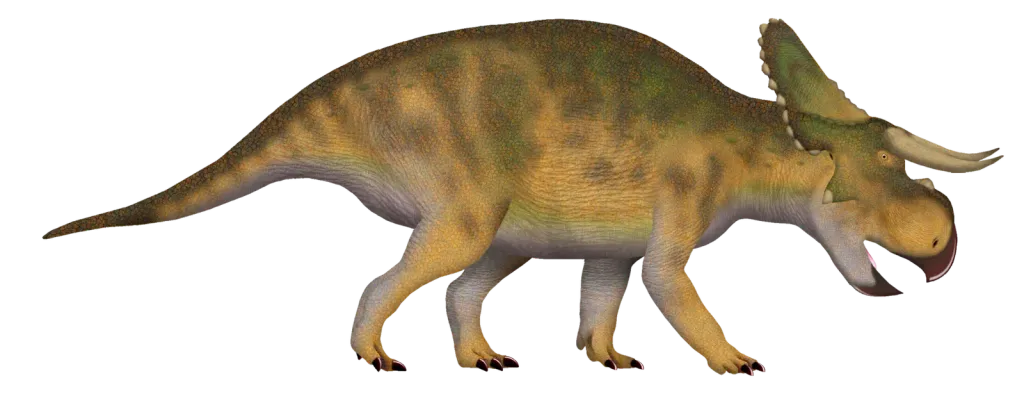
A big-nosed horned dinosaur from the Late Cretaceous of southern Utah, with a short, deep snout and the longest brow horns of any centrosaurine. It lived about 76 million years ago on the island continent of Laramidia.
- Horned
- Quadrupedal
- Skin impressions known
- 時代
- 白亜紀· カンパニアン期
- 食性
- 植物食
- 全長
- 4.5 m
- 体重
- 1,500 kg
- 産地
- Utah, United States
クイックアンサー
- Nasutoceratops titusiの大きさは?
- Nasutoceratops titusiの全長は約4.5 mでした。腰の高さは約1.4–1.8 mでした。体重は約1.5 tでした。 (Wikipedia: Nasutoceratops 2026; Paul 2016)
- Nasutoceratops titusiはいつ生きていた?
- Nasutoceratops titusiは白亜紀後期、約7600万〜7550万年前に生きていました。 (Sampson et al. 2013; Paleobiology Database: Nasutoceratops titusi … 2026)
- Nasutoceratops titusiの化石はどこで見つかった?
- Nasutoceratops titusiの化石はKaiparowits Formation (Utah)、United Statesで見つかっています。 (Sampson et al. 2013; Paleobiology Database: Nasutoceratops titusi … 2026)
- Nasutoceratops titusiは何を食べていた?
- Nasutoceratops titusiは植物食でした。 (Sampson et al. 2013; Paleobiology Database: Nasutoceratops titusi … 2026)
- Nasutoceratops titusiは誰がいつ命名した?
- Nasutoceratops titusiは2013年にScott D. Sampson et al.によって記載されました。 (Sampson et al. 2013; Paleobiology Database: Nasutoceratops titusi … 2026)
- Nasutoceratops titusiは『ジュラシック・パーク』に登場しますか?
- はい。Nasutoceratops titusiは『ジュラシック・ワールド/新たなる支配者』 (2022)に登場します。映画には脚色があります。このページでは化石からわかることと比べています。 (Wikipedia: Dinosaurs in Jurassic Park 2026; Sampson et al. 2013)
このページの内容

- 時代
- 白亜紀76–75.5 Ma
- 食性
- 植物食
- 全長
- 4.5 m
- 体重
- 1.5 t
- 産地
- United States
- 分類
- Ceratopsia · Ceratopsidae
- 記載
- 2013, Scott D. Sampson et al.
概要
このコンテンツは英語でご覧いただけます。
Nasutoceratops titusi lived about 76 million years ago in what is now southern Utah, on Laramidia, the western island continent of North America. Eric Lund found its skull in 2006 in the Kaiparowits Formation of Grand Staircase-Escalante National Monument, and Scott Sampson and colleagues named it in 2013.
Its 1.8 m skull had an unusually short, deep snout with a hugely enlarged nasal opening, a low nasal horn and forward-curving brow horns spanning about 40% of the skull length, the longest of any centrosaurine. Its frill was broad and plain.
Nasutoceratops was the first centrosaurine from the south of Laramidia of the same age as the many northern ones. Sampson and colleagues saw it as support for separate northern and southern dinosaur provinces on Laramidia, an idea other researchers have contested.
名前の意味
From Latin nasutus ("large-nosed") and Latinized Greek ceratops ("horned face"); titusi honours Alan Titus, palaeontologist at Grand Staircase-Escalante National Monument (Sampson et al. 2013).
生態と証拠
この動物がどのように暮らしていたかについての科学者の考えと、それぞれの説を支える証拠の強さです。
その他
Laramidia was divided into northern and southern dinosaur provinces.
証拠レベル:議論ありSampson and colleagues saw a southern centrosaurine lineage living at the same time as northern ones as strong support; others argue the differences reflect age and sampling.
賛成・反対の証拠 · 1
支持する証拠
系統推定 · Centrosaurine phylogeny with Nasutoceratops
Nasutoceratops is the sister taxon of Avaceratops in an early-branching centrosaurine subclade.
Nasutoceratops had an unusually large, air-filled nose.
証拠レベル:直接証拠The nasal opening region makes up about three-quarters of the snout in front of the eyes, and the nasal bones hold an internal air space.
賛成・反対の証拠 · 1
支持する証拠
標本 · Nasutoceratops holotype skull
A 1.8 m skull with a hypertrophied narial region (about 75% of preorbital length), pneumatic nasals, a short snout and rostrolaterally directed brow horns spanning about 40% of skull length.
標本: UMNH VP 16800
Nasutoceratops had the longest brow horns of any centrosaurine.
証拠レベル:直接証拠In the holotype they span about 40% of the skull length and reach almost to the tip of the snout.
賛成・反対の証拠 · 1
支持する証拠
標本 · Nasutoceratops holotype skull
A 1.8 m skull with a hypertrophied narial region (about 75% of preorbital length), pneumatic nasals, a short snout and rostrolaterally directed brow horns spanning about 40% of skull length.
標本: UMNH VP 16800
サイズ
- 全長
- 4.5 m
- 体高
- 1.6 m文献上の範囲 1.4–1.8 m
- 体重
- 1,500 kg
(14.8 フィート)
(5.2 フィート)
タイムライン
時代: カンパニアン期 (83.6–72.1 Ma), 白亜紀後期 (100.5–66 Ma)
Middle unit of the Kaiparowits Formation, about 75.97-75.51 Ma (Sampson et al. 2013, recalibrated after Roberts et al.); PBDB bins the collection as late Campanian.
産地
累層
- Kaiparowits Formation · Utah
- UMNH VP Locality 940, Grand Staircase-Escalante · Kaiparowits Formation · Utah · 位置はおおよそ
これは化石が見つかった場所で、この動物が暮らしていた範囲全体ではありません。
生態系

生息環境: Kaiparowits
氾濫原, 河川系, 沼地・湿地
Alluvial floodplains of large rivers on coastal southern Laramidia, with wetlands and swamps, west of the Western Interior Seaway.
分類
- クレードDinosauria
- クレードOrnithischia
- クレードCeratopsia
- 科Ceratopsidae
- 亜科Centrosaurinae
- 属Nasutoceratops
- 種Nasutoceratops titusi
分類上の地位: 有効
化石記録

| 標本番号 | 種別 | 所蔵機関 | 発見 |
|---|---|---|---|
| UMNH VP 16800 | ホロタイプ | Natural History Museum of Utah (UMNH) | 2006 |
| UMNH VP 19466 | 参照標本 | Natural History Museum of Utah (UMNH) | — |
見つかった部位
ホロタイプ: UMNH VP 16800
- 保存
- 部分的
- 復元
- 不明・未記録
ホロタイプ: UMNH VP 16800
部位ごと(表)
| 部位 | 状態 |
|---|---|
| Skull | 保存 |
| Mandible | 不明・未記録 |
| Teeth | 不明・未記録 |
| Cervical vertebrae | 部分的 · Syncervical. |
| Dorsal vertebrae | 部分的 · Three fragmentary dorsals. |
| Sacrum | 不明・未記録 |
| Caudal vertebrae | 不明・未記録 |
| Ribs | 不明・未記録 |
| Gastralia | 不明・未記録 |
| Scapula / shoulder girdle | 不明・未記録 |
| Humerus | 保存 |
| Forearm (radius / ulna) | 部分的 |
| Hand (manus) | 不明・未記録 |
| Pelvis | 不明・未記録 |
| Femur | 不明・未記録 |
| Tibia / fibula | 不明・未記録 |
| Foot (pes) | 不明・未記録 |
参照標本: UMNH VP 19466
部位ごと(表)
| 部位 | 状態 |
|---|---|
| Skull | 部分的 |
| Mandible | 不明・未記録 |
| Teeth | 不明・未記録 |
| Cervical vertebrae | 不明・未記録 |
| Dorsal vertebrae | 不明・未記録 |
| Sacrum | 不明・未記録 |
| Caudal vertebrae | 不明・未記録 |
| Ribs | 不明・未記録 |
| Gastralia | 不明・未記録 |
| Scapula / shoulder girdle | 不明・未記録 |
| Humerus | 不明・未記録 |
| Forearm (radius / ulna) | 不明・未記録 |
| Hand (manus) | 不明・未記録 |
| Pelvis | 不明・未記録 |
| Femur | 不明・未記録 |
| Tibia / fibula | 不明・未記録 |
| Foot (pes) | 不明・未記録 |
発見
- 記載年
- 2013
- 記載者
- Scott D. Sampson et al.
- タイプ標本
- UMNH VP 16800

発見の年表
2006 · 最初の化石の発見
Nasutoceratops skull found at UMNH Locality 940
Found during the Kaiparowits Basin Project surveys of Grand Staircase-Escalante National Monument.
人物:Eric K. Lund
2013 · 正式に記載
Sampson and colleagues name Nasutoceratops titusi
The "large-nosed horned face" is named in Proceedings of the Royal Society B.
人物:Scott D. Sampson, Eric K. Lund
『ジュラシック・パーク』『ジュラシック・ワールド』での登場
映画
- ジュラシック・ワールド/新たなる支配者 (2022)
このコンテンツは英語でご覧いただけます。
映画での描かれ方
A horned herbivore that returns in Dominion after its debut in the short Battle at Big Rock.
映画と化石の違い
- The real animal had a short snout and long, forward-curving brow horns, and is known from Utah.
映画のタイトルは作品の特定のためにのみ記載しています。DinoDex は『ジュラシック・パーク』/『ジュラシック・ワールド』シリーズとは無関係であり、その承認を受けていません。 映画に登場する恐竜をすべて見る
出典
- (2026). Paleobiology Database: Nasutoceratops titusi occurrence and type collection 97803. The Paleobiology Database (paleobiodb.org), data service 1.2, accessed 2026-09-23. https://paleobiodb.org/data1.2/colls/list.json?coll_id=97803&show=paleoloc,strat,loc,ref,geo&pgm=gplates&vocab=pbdb(新しいタブで開きます)
- (2026). Wikipedia: Nasutoceratops. Wikipedia (English), accessed 2026-09-24. https://en.wikipedia.org/wiki/Nasutoceratops(新しいタブで開きます)
- (2026). Wikipedia: Dinosaurs in Jurassic Park. Wikipedia. https://en.wikipedia.org/wiki/Dinosaurs_in_Jurassic_Park(新しいタブで開きます)
- Paul, G. S. (2016). The Princeton Field Guide to Dinosaurs (2nd edition). Princeton University Press.
- Sampson, S. D., Lund, E. K., Loewen, M. A., Farke, A. A. & Clayton, K. E. (2013). A remarkable short-snouted horned dinosaur from the Late Cretaceous (late Campanian) of southern Laramidia. Proceedings of the Royal Society B 280: 20131186. doi:10.1098/rspb.2013.1186(新しいタブで開きます)