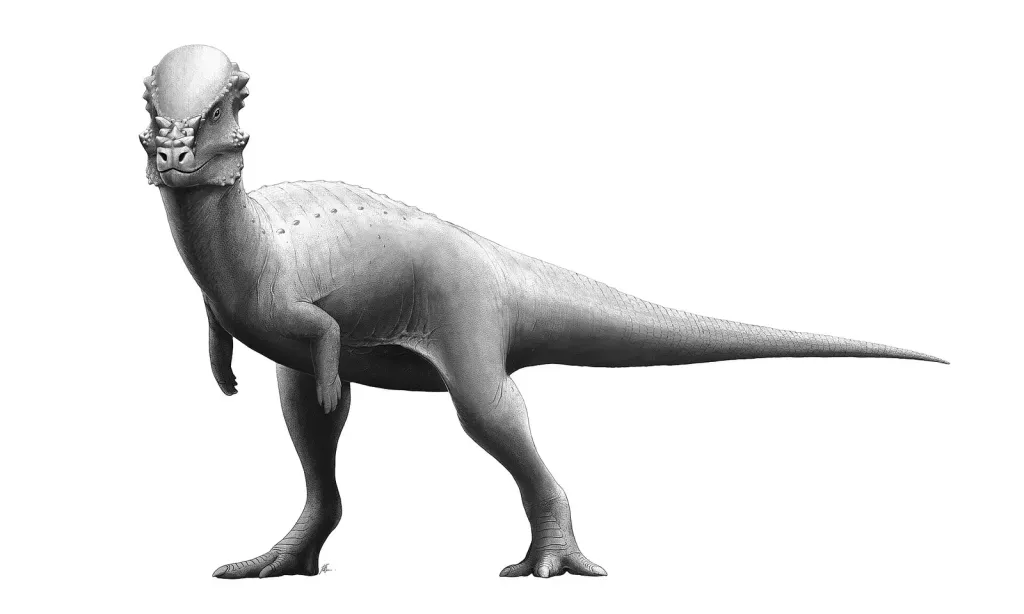
Pachycephalosaurus wyomingensis
発音: PAK-ee-SEF-ah-loh-SORE-us wye-oh-ming-EN-sis
Pachycephalosauria · Pachycephalosauridae
A dome-headed dinosaur from the latest Cretaceous of western North America, a neighbour of T. rex. Its skull roof was a thick dome of solid bone; injuries on many domes suggest that pachycephalosaurs butted heads.
- Bipedal
- Unusual anatomy
- 時代
- 白亜紀· マーストリヒチアン期
- 食性
- 植物食
- 全長
- 4.5 m
- 体重
- 370–450 kg
- 産地
- Montana, Wyoming, South Dakota, North Dakota, United States
クイックアンサー
- Pachycephalosaurus wyomingensisの大きさは?
- Pachycephalosaurus wyomingensisの全長は約4.5 mでした。腰の高さは約1.2–1.6 mでした。体重は約370–450 kgでした。 (Wikipedia: Pachycephalosaurus 2026; Paul 2016)
- Pachycephalosaurus wyomingensisはいつ生きていた?
- Pachycephalosaurus wyomingensisは白亜紀後期、約7210万〜6600万年前に生きていました。 (Paleobiology Database: Pachycephalosaurus occ… 2026; Cohen et al. 2023)
- Pachycephalosaurus wyomingensisの化石はどこで見つかった?
- Pachycephalosaurus wyomingensisの化石はHell Creek Formation (Montana)、Lance Formation (Wyoming)、United Statesで見つかっています。 (Gilmore 1931; Brown & Schlaikjer 1943)
- Pachycephalosaurus wyomingensisは何を食べていた?
- Pachycephalosaurus wyomingensisは植物食でした。 (Gilmore 1931; Brown & Schlaikjer 1943)
- Pachycephalosaurus wyomingensisは誰がいつ命名した?
- Pachycephalosaurus wyomingensisは1931年にCharles W. Gilmoreによって記載されました。 (Gilmore 1931; Paleobiology Database: Pachycephalosaurus occ… 2026)
- Pachycephalosaurus wyomingensisは『ジュラシック・パーク』に登場しますか?
- はい。Pachycephalosaurus wyomingensisは『ロスト・ワールド/ジュラシック・パーク』 (1997)に登場します。映画には脚色があります。このページでは化石からわかることと比べています。 (Wikipedia: Dinosaurs in Jurassic Park 2026; Peterson et al. 2013)
このページの内容

- 時代
- 白亜紀72.1–66 Ma
- 食性
- 植物食
- 全長
- 4.5 m
- 体重
- 0.4–0.5 t
- 産地
- United States
- 分類
- Pachycephalosauria · Pachycephalosauridae
- 記載
- 1931, Charles W. Gilmore
概要
このコンテンツは英語でご覧いただけます。
Pachycephalosaurus wyomingensis lived in western North America at the end of the Cretaceous, in the Hell Creek and Lance formations. Charles Gilmore named the species in 1931 as Troodon wyomingensis, from a skull dome found in Niobrara County, Wyoming; Barnum Brown and Erich Schlaikjer created the genus Pachycephalosaurus in 1943.
It is known mostly from skulls. The skull roof formed a high dome of dense bone, ringed with bony knobs and spikes. Jack Horner and Mark Goodwin (2009) argued that the flat-headed, spiky "Dracorex" and "Stygimoloch" are younger growth stages of Pachycephalosaurus, whose dome inflated and spikes shrank as it grew.
How the dome was used is debated. A survey of 109 pachycephalosaurid skulls found healed lesions on 22% of the domes, clustered at the top, which fits head-to-head butting (Peterson et al. 2013). Flat-headed individuals had no such injuries.
名前の意味
"Thick-headed lizard", from Greek pachys ("thick"), kephalē ("head") and sauros ("lizard") (Brown & Schlaikjer 1943); wyomingensis for Wyoming (Gilmore 1931).
生態と証拠
この動物がどのように暮らしていたかについての科学者の考えと、それぞれの説を支える証拠の強さです。
成長
Dracorex and Stygimoloch are young Pachycephalosaurus.
証拠レベル:中程度の証拠Their skulls show immature features and fit a growth series in which the dome inflates and the spikes shrink. The idea is widely followed but not universally accepted.
賛成・反対の証拠 · 1
支持する証拠
比較解剖学 · Pachycephalosaurus cranial growth series
CT and histology of "Dracorex" and "Stygimoloch" skulls show open sutures and juvenile tissue; their spikes and flat heads match early stages of Pachycephalosaurus skulls such as AMNH 1696.
標本: AMNH 1696
行動
Pachycephalosaurus used its dome to butt heads.
証拠レベル:中程度の証拠Healed injuries on about a fifth of domes, concentrated at the top, fit head-to-head impacts as in some living hoofed mammals. The dome may also have served for display.
賛成・反対の証拠 · 1
支持する証拠
標本 · Pachycephalosaurid dome lesion survey
Of 109 pachycephalosaurid domes, 24 (22%) from at least 9 species have lesions consistent with healed trauma and infection, clustered near the top of the dome; flat-headed specimens have none.
その他
The Pachycephalosaurus dome was made of dense bone.
証拠レベル:直接証拠Thin sections of an adult dome show solid, dense bone tissue.
賛成・反対の証拠 · 1
支持する証拠
組織学 · Pachycephalosaurus dome histology
Sections of an adult dome show dense metaplastic bone with fibrous, acellular tissue.

サイズ
- 全長
- 4.5 m
- 体高
- 1.4 m文献上の範囲 1.2–1.6 m
- 体重
- 370–450 kg
(14.8 フィート)
(4.6 フィート)
タイムライン
時代: マーストリヒチアン期 (72.1–66 Ma), 白亜紀後期 (100.5–66 Ma)
Maastrichtian bounds of the last-appearance interval in PBDB. PBDB also lists a single Campanian occurrence from Alberta (first appearance 83.6 Ma), left out here as doubtful.
産地
累層
- Hell Creek Formation · Montana
- Lance Formation · Wyoming
- 9 mi SW of Warren Post Office, Niobrara County, Wyoming · Lance Formation · Wyoming · 位置はおおよそ
これは化石が見つかった場所で、この動物が暮らしていた範囲全体ではありません。
生態系

生息環境: Hell Creek
68–66 百万年前 · 氾濫原, 河川系, 森林, 海岸平野
Warm, humid coastal lowlands and river floodplains west of the retreating Western Interior Seaway at the very end of the Cretaceous, with forests of conifers and flowering plants. The ecosystem ends at the Cretaceous-Paleogene extinction.


分類
- クレードDinosauria
- クレードOrnithischia
- クレードPachycephalosauria
- 科Pachycephalosauridae
- 属Pachycephalosaurus
- 種Pachycephalosaurus wyomingensis
分類上の地位: 有効
化石記録

| 標本番号 | 種別 | 所蔵機関 | 発見 |
|---|---|---|---|
| USNM 12031 | ホロタイプ | National Museum of Natural History, Smithsonian Institution (USNM) | — |
| AMNH 1696 | 参照標本 | American Museum of Natural History (AMNH) | — |
見つかった部位
ホロタイプ: USNM 12031
- 保存
- 部分的
- 復元
- 不明・未記録
ホロタイプ: USNM 12031
部位ごと(表)
| 部位 | 状態 |
|---|---|
| Skull | 部分的 · Frontoparietal dome. |
| Mandible | 不明・未記録 |
| Teeth | 不明・未記録 |
| Cervical vertebrae | 不明・未記録 |
| Dorsal vertebrae | 不明・未記録 |
| Sacrum | 不明・未記録 |
| Caudal vertebrae | 不明・未記録 |
| Ribs | 不明・未記録 |
| Gastralia | 不明・未記録 |
| Scapula / shoulder girdle | 不明・未記録 |
| Humerus | 不明・未記録 |
| Forearm (radius / ulna) | 不明・未記録 |
| Hand (manus) | 不明・未記録 |
| Pelvis | 不明・未記録 |
| Femur | 不明・未記録 |
| Tibia / fibula | 不明・未記録 |
| Foot (pes) | 不明・未記録 |
参照標本: AMNH 1696
部位ごと(表)
| 部位 | 状態 |
|---|---|
| Skull | 保存 |
| Mandible | 不明・未記録 |
| Teeth | 不明・未記録 |
| Cervical vertebrae | 不明・未記録 |
| Dorsal vertebrae | 不明・未記録 |
| Sacrum | 不明・未記録 |
| Caudal vertebrae | 不明・未記録 |
| Ribs | 不明・未記録 |
| Gastralia | 不明・未記録 |
| Scapula / shoulder girdle | 不明・未記録 |
| Humerus | 不明・未記録 |
| Forearm (radius / ulna) | 不明・未記録 |
| Hand (manus) | 不明・未記録 |
| Pelvis | 不明・未記録 |
| Femur | 不明・未記録 |
| Tibia / fibula | 不明・未記録 |
| Foot (pes) | 不明・未記録 |
発見
- 記載年
- 1931
- 記載者
- Charles W. Gilmore
- タイプ標本
- USNM 12031
発見の年表
1931 · 正式に記載
Gilmore names Troodon wyomingensis
Gilmore describes a thick skull dome from the Lance Formation of Wyoming as a new species of Troodon.
人物:Charles W. Gilmore
1943 · 改名
Brown and Schlaikjer name Pachycephalosaurus
A study of dome-headed dinosaurs creates the genus Pachycephalosaurus and moves wyomingensis into it.
人物:Barnum Brown, Erich M. Schlaikjer
2009 · 主要な研究
Horner and Goodwin link Dracorex and Stygimoloch to Pachycephalosaurus
Histology and CT scans are used to build a growth series.
人物:John R. Horner, Mark B. Goodwin
2013 · 主要な研究
Survey of dome injuries in pachycephalosaurs
Peterson, Dischler and Longrich count lesions on 109 domes.
人物:Joseph E. Peterson
『ジュラシック・パーク』『ジュラシック・ワールド』での登場
映画
- ロスト・ワールド/ジュラシック・パーク (1997)
このコンテンツは英語でご覧いただけます。
映画での描かれ方
Rams a hunters' vehicle with its domed skull in The Lost World.
映画と化石の違い
- The film animal is about half the length of the real one.
- Whether the dome was used for ramming is debated; injuries on domes support some head-to-head combat.
映画のタイトルは作品の特定のためにのみ記載しています。DinoDex は『ジュラシック・パーク』/『ジュラシック・ワールド』シリーズとは無関係であり、その承認を受けていません。 映画に登場する恐竜をすべて見る
出典
- (2026). Paleobiology Database: Pachycephalosaurus occurrences. The Paleobiology Database (paleobiodb.org), data service 1.2, accessed 2026-09-23. https://paleobiodb.org/data1.2/occs/list.txt?base_name=Pachycephalosaurus&show=coords,paleoloc,strat,loc,ref&pgm=gplates(新しいタブで開きます)
- (2026). Wikipedia: Pachycephalosaurus. Wikipedia (English), accessed 2026-09-23. https://en.wikipedia.org/wiki/Pachycephalosaurus(新しいタブで開きます)
- (2026). Wikipedia: Dinosaurs in Jurassic Park. Wikipedia. https://en.wikipedia.org/wiki/Dinosaurs_in_Jurassic_Park(新しいタブで開きます)
- Brown, B. & Schlaikjer, E. M. (1943). A study of the troödont dinosaurs with the description of a new genus and four new species. Bulletin of the American Museum of Natural History 82(5): 115-150.
- Cohen, K. M., Harper, D. A. T., Gibbard, P. L. & Car, N. (2023). International Chronostratigraphic Chart (v2023/09). International Commission on Stratigraphy. https://stratigraphy.org/ICSchart/ChronostratChart2023-09.pdf(新しいタブで開きます)
- Gilmore, C. W. (1931). A new species of troödont dinosaur from the Lance formation of Wyoming. Proceedings of the United States National Museum 79(9): 1-6. doi:10.5479/si.00963801.79-2875.1(新しいタブで開きます)
- Horner, J. R. & Goodwin, M. B. (2009). Extreme cranial ontogeny in the Upper Cretaceous dinosaur Pachycephalosaurus. PLoS ONE 4: e7626. doi:10.1371/journal.pone.0007626(新しいタブで開きます)
- Paul, G. S. (2016). The Princeton Field Guide to Dinosaurs (2nd edition). Princeton University Press.
- Peterson, J. E., Dischler, C. & Longrich, N. R. (2013). Distributions of cranial pathologies provide evidence for head-butting in dome-headed dinosaurs (Pachycephalosauridae). PLoS ONE 8: e68620. doi:10.1371/journal.pone.0068620(新しいタブで開きます)