The Smallest Dinosaurs: Compsognathus, Microraptor and More
Crow-sized Microraptor and chicken-sized Compsognathus are among the smallest non-bird dinosaurs known from good skeletons. The true record holder is alive today.
此内容目前仅提供英文版。
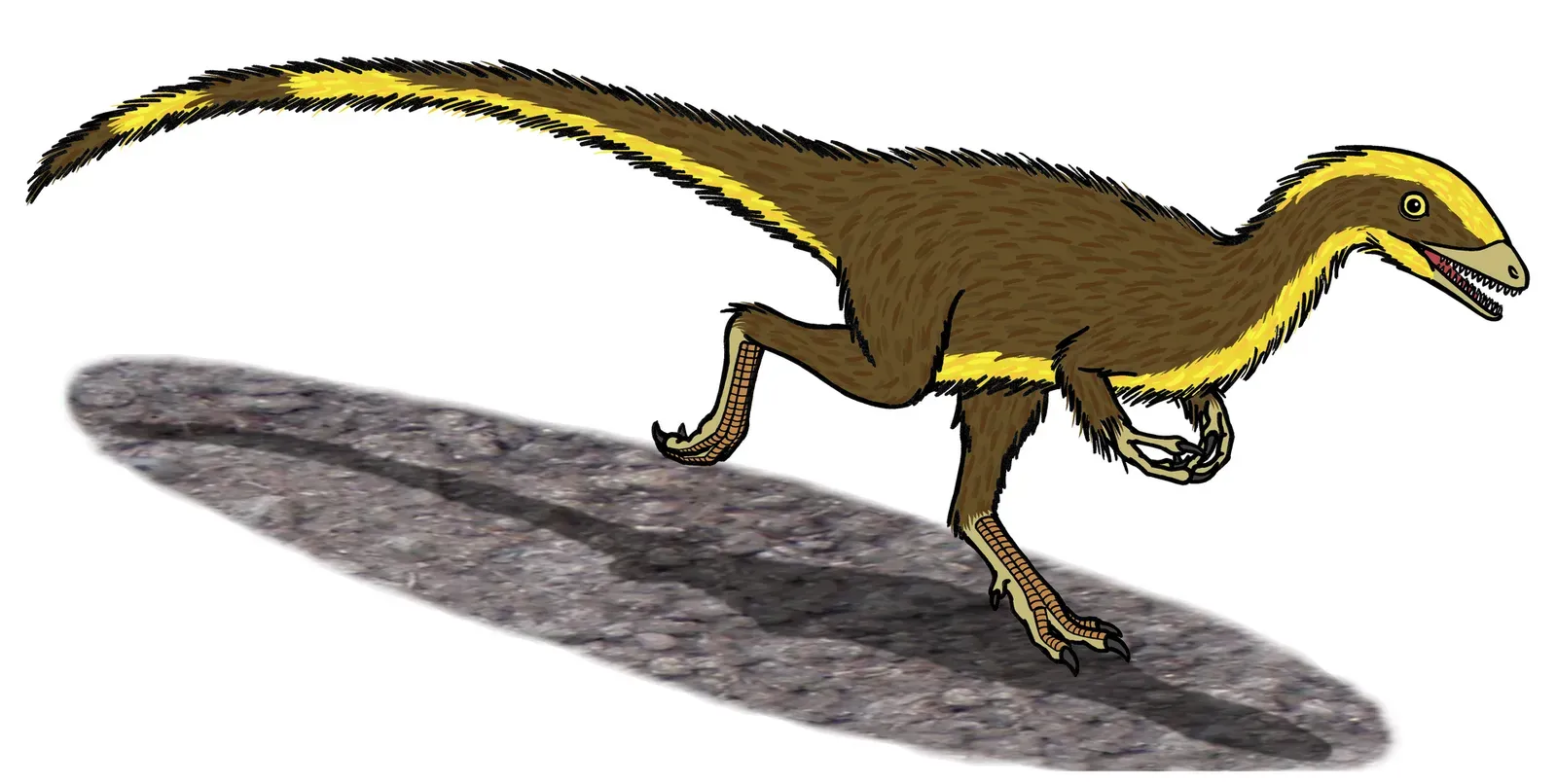
Among non-bird dinosaurs known from good skeletons, some of the smallest are Microraptor, under 1 m (3.3 ft) long and about 0.5 to 1.4 kg, and the type specimen of Compsognathus, about 0.7 m and 0.3 to 0.6 kg. But since birds are dinosaurs, the smallest dinosaur that ever lived is almost certainly a living one: a hummingbird.
Here is how the small ones on DinoDex compare, and why naming a single "smallest" is harder than it sounds.
The smallest dinosaurs at a glance
- Archaeopteryx: about 0.5 m (1.6 ft) for large individuals; raven-sized, and usually placed on the bird line.
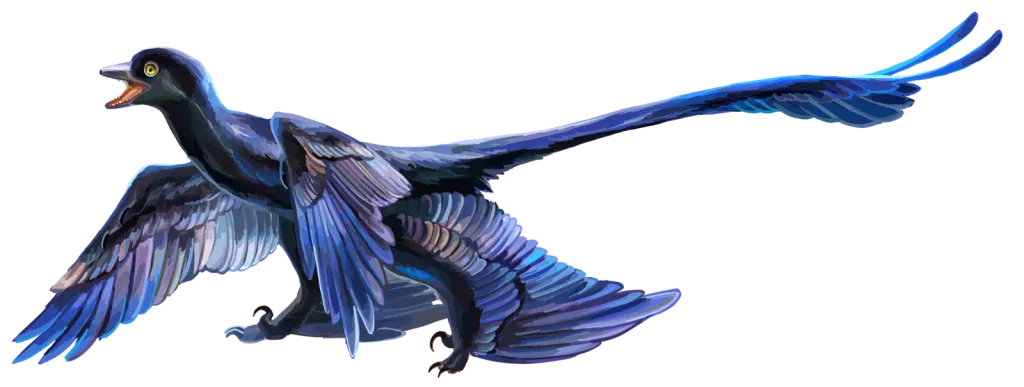
- Microraptor: about 0.77 to 0.8 m (2.5 to 2.6 ft) long, about 0.5 to 1.4 kg (1.1 to 3.1 lb); crow-sized.
- Compsognathus: about 0.7 to 1.4 m (2.3 to 4.6 ft) and 0.32 to 3.5 kg (0.7 to 7.7 lb), depending on the specimen.
- Velociraptor, for scale: about 1.5 m (4.9 ft) and 15 kg (33 lb).
These figures are low confidence on their profiles; several come from secondary summaries of the literature.
Compsognathus: the famous small one
Compsognathus was for a long time the textbook "smallest dinosaur". Its type specimen, from the Late Jurassic lagoon deposits of Bavaria, is about 0.70 to 0.75 m long and estimated at 0.32 to 0.58 kg. It still has its last meal inside it: a lizard, studied in detail by Conrad (2018).
A second skeleton from Canjuers in France, redescribed by Peyer (2006), is about 1.25 to 1.4 m long and 2.5 to 3.5 kg. The German one may simply have been younger. That is the first problem with crowning a smallest dinosaur: a small skeleton may be a juvenile, not a small species.

Microraptor: four wings, crow-sized
Microraptor, from the Early Cretaceous Jiufotang Formation of Liaoning, China, was about 0.77 to 0.8 m long, much of it tail, and about 0.5 to 1.4 kg. It had long flight feathers on both its arms and its legs, and one fossil has a bird in its stomach (O'Connor et al. 2011).
It is a relative of Velociraptor, which shows how widely body size varied in the "raptor" family: Velociraptor was at least ten times heavier, and we measure it against a person in how tall was a Velociraptor?
Archaeopteryx: on the line to birds
Archaeopteryx, from the Late Jurassic limestones of Solnhofen, is about 0.5 m long in large individuals, a figure widely attributed to Wellnhofer's 2009 monograph. It is usually placed at the base of the bird lineage, so it sits right on the boundary this article is about.
How do they compare with animals today?
Everyday comparisons help. On their profiles, Compsognathus is described as chicken-sized, Microraptor as crow-sized and Archaeopteryx as raven-sized. Much of each animal's length was tail, so their bodies were smaller than the total length suggests. Most were agile hunters of small prey: the Compsognathus type specimen swallowed a lizard, and Microraptor fossils show it ate birds, fish, lizards and small mammals.
Are birds the smallest dinosaurs?
Yes. Birds descend from small feathered theropods like these, so they are dinosaurs in the same way that bats are mammals. The smallest living bird, the bee hummingbird of Cuba, is only a few centimetres long, far smaller than any non-bird dinosaur known. If the question is "the smallest dinosaur that ever lived", a hummingbird is the honest answer.
Why is the smallest non-bird dinosaur hard to name?
- Small bones rarely survive. Tiny, hollow bones break or dissolve before they fossilise, so small species are under-represented. Our explainer on how complete dinosaur fossils are goes into this bias.
- Juveniles look like small species. Many tiny skeletons are young animals of larger kinds.
- Fragments mislead. Some candidates for "smallest" are known from a few bones, which makes body size a guess.
That is why this list only includes animals with good skeletons and sourced size estimates, rather than every name that has been called the smallest.
Quick answers
- What was the smallest non-bird dinosaur? No single answer is secure; Microraptor and the small Compsognathus specimen are among the smallest known from good skeletons.
- How big was Compsognathus? About 0.7 to 1.4 m (2.3 to 4.6 ft) and 0.32 to 3.5 kg, depending on the specimen.
- What is the smallest dinosaur alive today? The bee hummingbird, since birds are dinosaurs.

Sources
- (2026). Wikipedia: Compsognathus. Wikipedia (English), accessed 2026-09-23 链接
- Peyer, K.. (2006). A reconsideration of Compsognathus from the upper Tithonian of Canjuers, southeastern France. Journal of Vertebrate Paleontology 26: 879-896 doi:10.1671/0272-4634(2006)26[879:AROCFT]2.0.CO;2
- Conrad, J. L.. (2018). A new lizard (Squamata) was the last meal of Compsognathus (Theropoda: Dinosauria) and is a holotype in a holotype. Zoological Journal of the Linnean Society 183: 584-634 doi:10.1093/zoolinnean/zlx055
- (2026). Wikipedia: Microraptor. Wikipedia (English), accessed 2026-09-23 链接
- O'Connor, J., Zhou, Z. & Xu, X.. (2011). Additional specimen of Microraptor provides unique evidence of dinosaurs preying on birds. Proceedings of the National Academy of Sciences 108 doi:10.1073/pnas.1117727108
- Wellnhofer, P.. (2009). Archaeopteryx: The Icon of Evolution. Verlag Dr. Friedrich Pfeil, München
- Paul, G. S.. (2016). The Princeton Field Guide to Dinosaurs (2nd edition). Princeton University Press
相关恐龙


相关文章

Size & comparisons
How Tall Was a Velociraptor Compared to a Human?
About 1.5 metres long and 15 kilograms: closer to a large turkey than to the film monsters. Here is how a real Velociraptor measures up against a person.
DinoDex team · 2026年9月27日 · 阅读约 4 分钟

Explainers
Did Velociraptor Have Feathers? What the Fossils Show
Yes. Bumps on a Velociraptor forearm bone show where large wing feathers were anchored. Here is the evidence, and what the feathers were probably for.
DinoDex team · 2026年9月26日 · 阅读约 4 分钟

Explainers
How Complete Are Dinosaur Fossils? Less Than You Think
Complete dinosaur skeletons are rare, and many species are known from a skull or a handful of bones. Here is why, and what it means for the numbers you read.
DinoDex team · 2026年9月26日 · 阅读约 5 分钟